Starting and staying on treatment
Treating your patients with MYQORZO™

Flexibility to rapidly titrate as early as 2 weeks1*
- Dose may be titrated after each echocardiogram1
- Echocardiogram within 2 to 8 weeks, adaptable to the needs of your patient1
- No monthly drug-to-drug interaction screenings required for your patients with the pharmacy
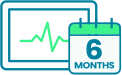
Monitor every 6 months1
- Echocardiogram every 6 months for patients with LVEF ≥55%1
- Every 3 months if LVEF is <55% and ≥50%1
- No monthly drug-to-drug interaction screenings required for your patients with the pharmacy
*Echocardiogram performed within 2 to 8 weeks after treatment initiation or dose adjustment. Dose adjustment based on assessed LVEF and LVOT gradient or drug interaction. After a treatment interruption due to low LVEF, resume treatment no earlier than 7 days, when LVEF ≥55% and re-initiate dose titration at the starting dose of 5 mg.1
REMS Program overview
MYQORZO is only available through the MYQORZO Risk Evaluation and Mitigation Strategy (REMS) Program to mitigate the risk of heart failure due to systolic dysfunction1
REMS Program: One-time certification and enrollment

One-time REMS certification
Healthcare providers must complete the REMS certification to prescribe MYQORZO

Patient enrollment
Submit a REMS Patient Enrollment Form and enroll eligible patients
Get certified and enroll patients
Visit MYQORZOREMS.com
Steps to treating your patients with MYQORZO
Echocardiogram and Patient Monitoring Form schedule1
Before initiating MYQORZO
Submit a REMS Patient
Enrollment Form

Recommended starting dose
5 mg
once
daily
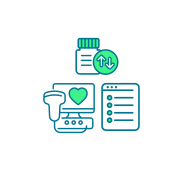
2 to 8 weeks after
initiating treatment
Submit a Patient
Monitoring Form
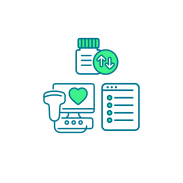
2 to 8 weeks after
each dose change
Submit a Patient
Monitoring Form
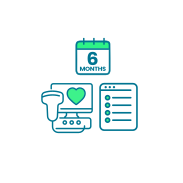
Every 6 months while
in maintenance†
Submit a Patient
Monitoring Form
Visit MYQORZOREMS.com to enroll your patients and submit Patient Monitoring Forms
†After the maintenance dose has been established, assess LVEF and Valsalva LVOT gradient every 6 months, or every 3 months in patients with LVEF <55% to ≥50%. Consider monitoring LVEF and adjust the dose per the dosing table as needed, in patients with an intercurrent illness (eg, severe infection or COVID-19), new arrhythmia (eg, new or uncontrolled atrial fibrillation or other uncontrolled tachyarrhythmia) or any other conditions that may impair systolic function. Do not increase the dose until the intercurrent illness or new arrhythmia has resolved or stabilized.1

Find out about individualized dosing and monitoring with MYQORZO
MYQORZO is only available through REMS-certified pharmacies: CareMed, Orsini, and qualified IDN pharmacies.
If your practice is part of an IDN, please check with your pharmacist before prescribing MYQORZO. Patients may request ongoing support from a MYQORZO Navigator when your office prescribes directly to a REMS-certified pharmacy. For more information, please visit MYQORZOREMS.com. Patients may request support from a Navigator at .
Have questions or need additional support to treat patients with MYQORZO?

Reach out to a MYQORZO Navigator if you have questions about REMS at 844-285-7367,
Monday through Friday, 8 AM to 8 PM ET

Enroll your patients in the MYQORZO & You Patient Support Program
COVID-19=coronavirus disease 2019; IDN=Integrated Delivery Network; LVEF=left ventricular ejection fraction; LVOT=left ventricular outflow tract.
Reference: 1. MYQORZO (aficamten). Prescribing information. Cytokinetics; 2025.